


Your wifi runs on wall power, your laptop doesn't
For Texas homeowners who work from the house and lose the day when the grid blinks.
You're mid-sentence on a client call and the house goes quiet.
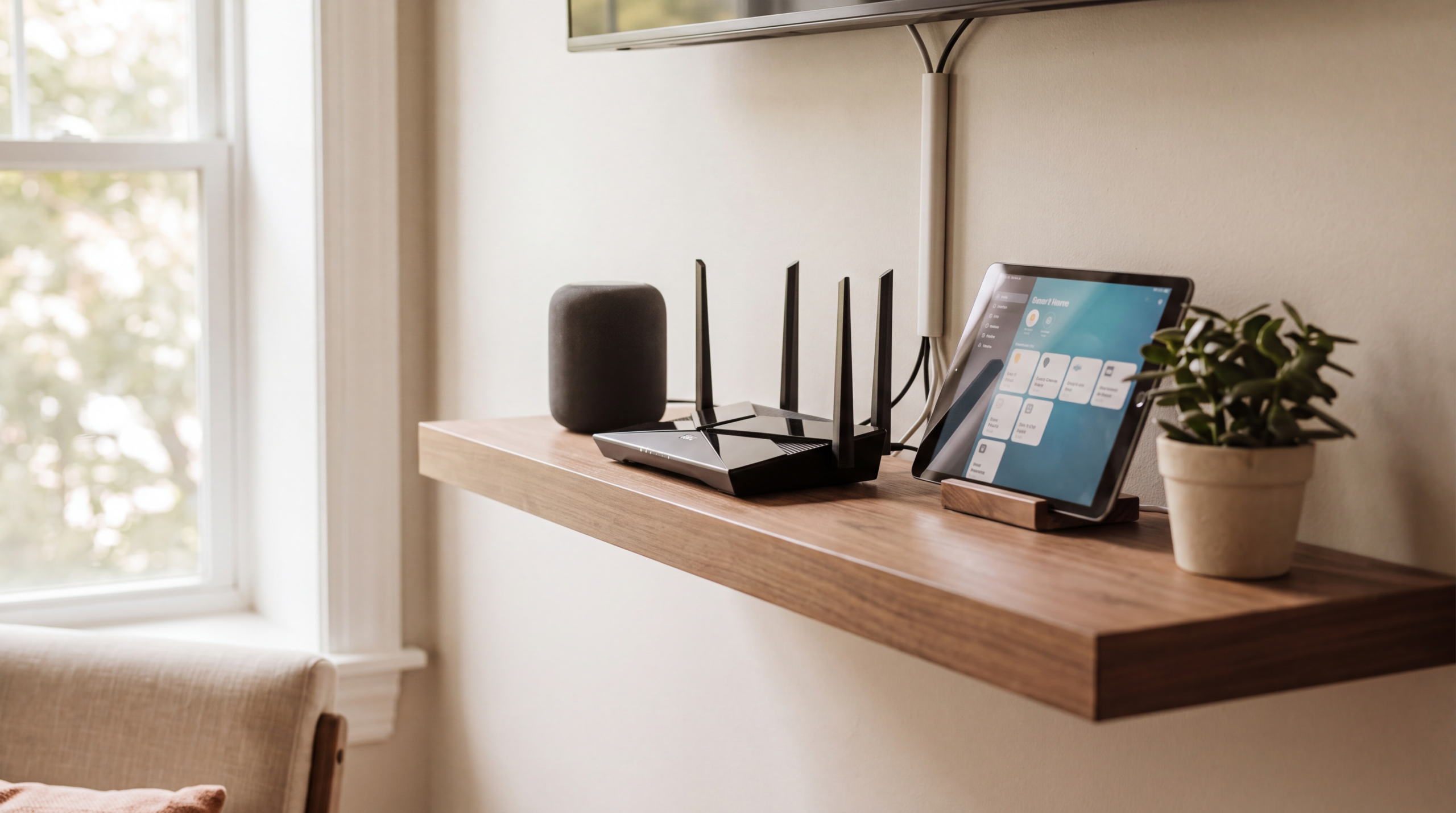
Your laptop is fine. It has a battery, that's the whole point of a laptop. What died is the wifi, because the router in the hallway and the modem in the closet both run on wall power and neither of them has ever had a battery in its life.
So you're sitting in front of a working computer, disconnected, watching your phone try to pick up the tethering while the meeting carries on without you. Four minutes later the power comes back and you rejoin, and everybody is polite about it.
It's not a catastrophe. It's just a thing that happens to you six times a year and makes you look like someone who can't be relied on to be present.
The UPS under your desk is protecting the wrong half
A lot of people who work from home have already bought a small uninterruptible power supply. It's a good instinct.
Look at what's actually plugged into it, though. The tower and a monitor, probably. Maybe the router if you were thoughtful about it, and most people weren't, because the router is in a different room from the desk.
Not plugged into it: the modem, the ONT in the closet, the second monitor, the desk lamp, the printer, and the air conditioning that's about to make the room unworkable in twenty minutes anyway.
A desk UPS buys the computer ten minutes so you can shut it down cleanly. That was always what it was for. It was never going to keep you working.
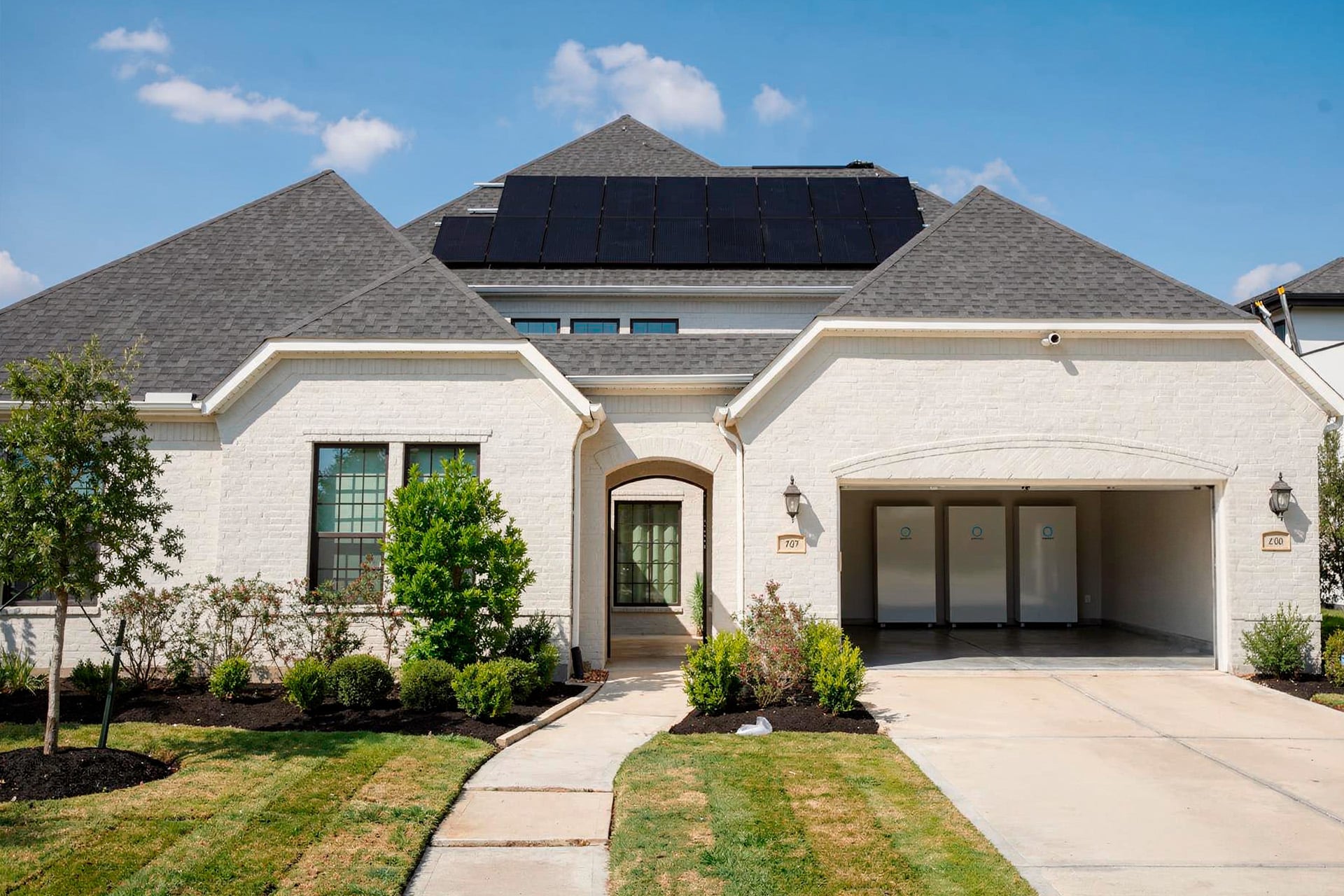
This is the same idea applied to the house
When the power drops, the batteries take over and the house keeps running. The router, the modem, the monitors, the lights, the fridge, all of it, because the whole house is on the battery rather than one power strip in the office.
For the short interruptions that actually wreck a workday, that's the difference between a blip you notice and a blip you don't. The clocks don't reset. You don't have to reboot the router and wait ninety seconds for it to negotiate. Nobody on the call knows anything happened.
For the honest version of the technical bit: this is a whole-home battery, not literally a UPS. A UPS is defined by having no transfer gap at all. This switches over fast enough that lights don't flicker and most equipment rides straight through, but it isn't the same architecture, and whether one specific sensitive device notices the handover is a question about that device. If you have something in the office that genuinely cannot see a gap, ask the engineer about it directly and keep your desk UPS for that one thing.
I'd rather tell you that than have you find out in a meeting.
The other thing about being home all day
Your bill is higher than your neighbors' and it's not your imagination.
They leave at eight and let the house drift up to eighty. You're in it, so the AC runs through the afternoon, plus two monitors, plus the coffee maker being on more than it should be. Working from home moved a chunk of your employer's overhead onto your electricity bill and nobody adjusted anything to account for it.
So here's the part that isn't about outages.
The equipment costs nothing. No down payment, no installation charge, no monthly equipment fee. Typically 45 to 60 kilowatt hours of battery capacity plus a solar array, and we own it, insure it, maintain it, and replace it if it wears out.
Your electricity becomes a flat 12 cents a kilowatt hour, all in. Delivery, fees, and taxes sit inside that twelve cents rather than stacking underneath it, which is why most people's real rate is higher than the number on their plan.
Go check. Take your last bill, divide the total by the kilowatt hours you used, and you'll have your actual rate in about fifteen seconds. Most people have never done it.
If you're under contract with a retail provider and they charge to leave, we cover it, whatever the number is. Your engineer walks you through the whole agreement before anything gets signed.
For the outage that isn't four minutes
On the batteries alone, up to 3 days, depending on what you're running. The solar feeds them during the day, so the system is designed to recharge itself rather than drain down to nothing.
Whether that includes running the air conditioning while you work, or for how long, depends on the house and the system size and what else is live. That's an engineer question and I'm not going to guess at it here. Ask them, and be specific about the fact that you need the office functional and not just the lights on, because that changes the conversation.
Why it's free
We make our money from the grid, not from you.
Power is cheap at three in the morning and expensive at five in the afternoon when every air conditioner in Texas is running at once. We charge the batteries when it's cheap and sell that stored energy back at peak. Across a lot of houses that's a real business, and that revenue is what pays for your equipment.
That's what a virtual power plant is. A fleet of home batteries the grid can lean on instead of firing up an expensive backup plant on a hot afternoon. The model's been around about ten years. Our team has been doing it in Texas for two.
The parts you'd rather hear now
You switch electricity providers.
That's how the rate works.
The batteries need indoor space.
Usually the garage.
Not every house qualifies.
Heavy shade, an old roof, the wrong roofline. The site survey decides and it's free either way.
Who this doesn't work for
Renters, and mobile or manufactured homes.
If you're on a co-op or a regulated utility you can't switch providers, and there's no version of this we can offer. Thirty seconds to check.
HOA is usually fine. We deal with them constantly and handle that paperwork ourselves.
What happens next
A video call with one of our engineers. Google Meet, which you will appreciate the irony of. Nobody comes to the house for it.
Bring your most recent electric bill, because without it nobody can build you a design or tell you your real rate. If there's a spouse or a co-owner, get them on the call.
If it looks like a fit, there's a free site survey. Somebody comes out and looks at the roof and the panel. If the house doesn't pass, that costs you nothing.
Count the times it happened this year
Then decide whether it's a nuisance or a problem.
Book the callBring your most recent electric bill. No commitment on the call.