

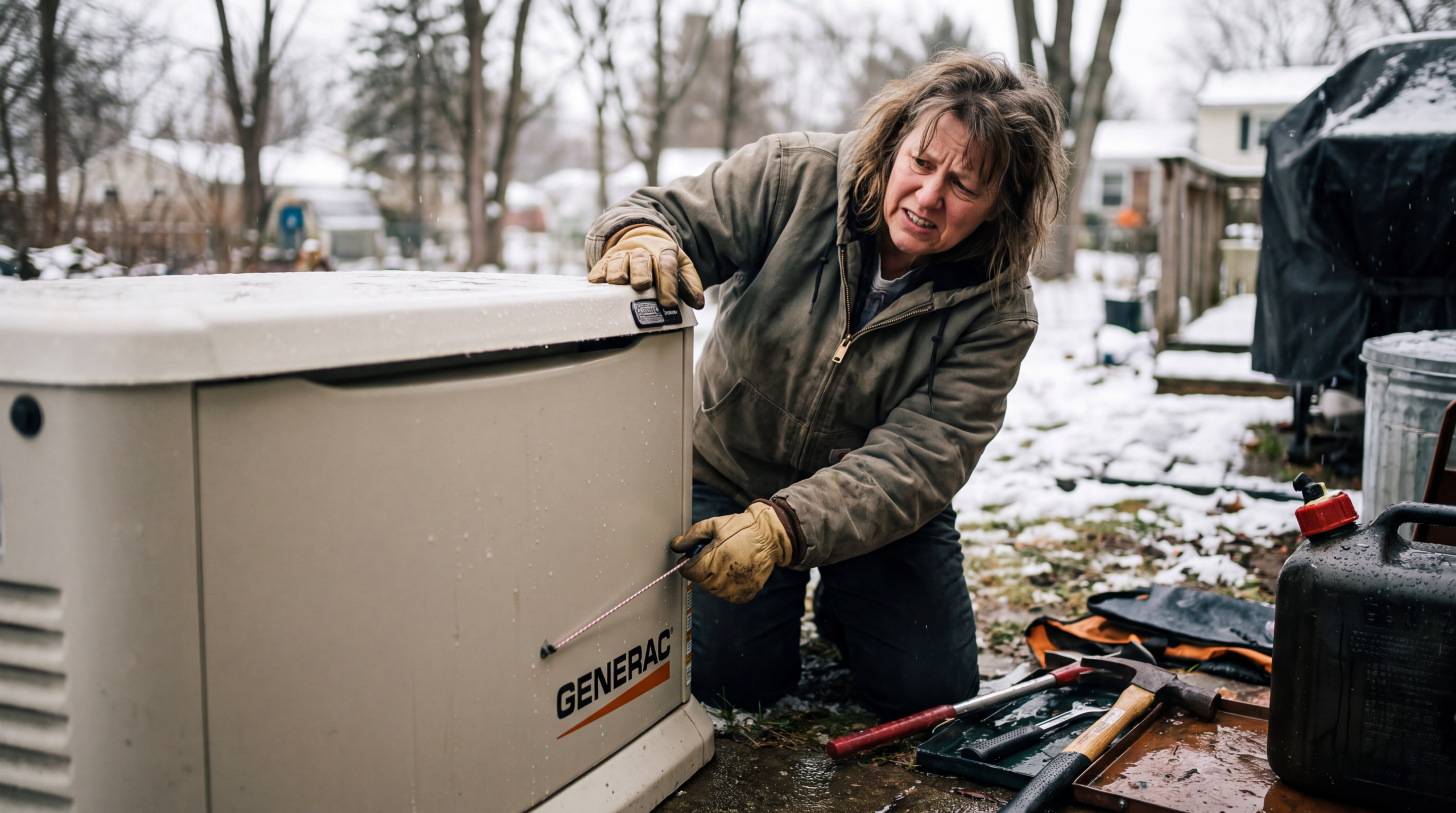
Keep the Generac
For Texas homeowners who already bought a generator and are wondering why we're calling.
You solved this already.
You watched a neighborhood go dark for four days, you got a quote, you argued with your spouse about the price, and you had a generator put in. It works. When the power goes, it comes on, and you go back to what you were doing.
So we're not going to spend this page telling you that you need backup power. You have backup power. You paid for it.
Here's the actual reason to keep reading.
Your generator is very good at one thing
Credit where it's due. A whole-home generator is the right answer to a long catastrophic outage. Beryl, the freeze, a hurricane that parks itself over the county for a week. Yours will run as long as the fuel holds, and it'll carry loads a battery has to think about.
Nobody sensible tells a generator owner to rip it out. We're not going to either.
It's also idle for about 360 days a year
That's the part worth sitting with.
Between outages, your generator does nothing except cost you. The annual service. The exercise cycle burning fuel every week to prove it still works. The propane sitting there, or the gas line you paid to run. If yours is a few years old you've probably also had the morning where it didn't start on the first try and you spent an afternoon on it.
Meanwhile your electric bill has kept doing whatever it was going to do.
The generator was insurance against the rare disaster. It was never going to make your power cheaper, and it doesn't.
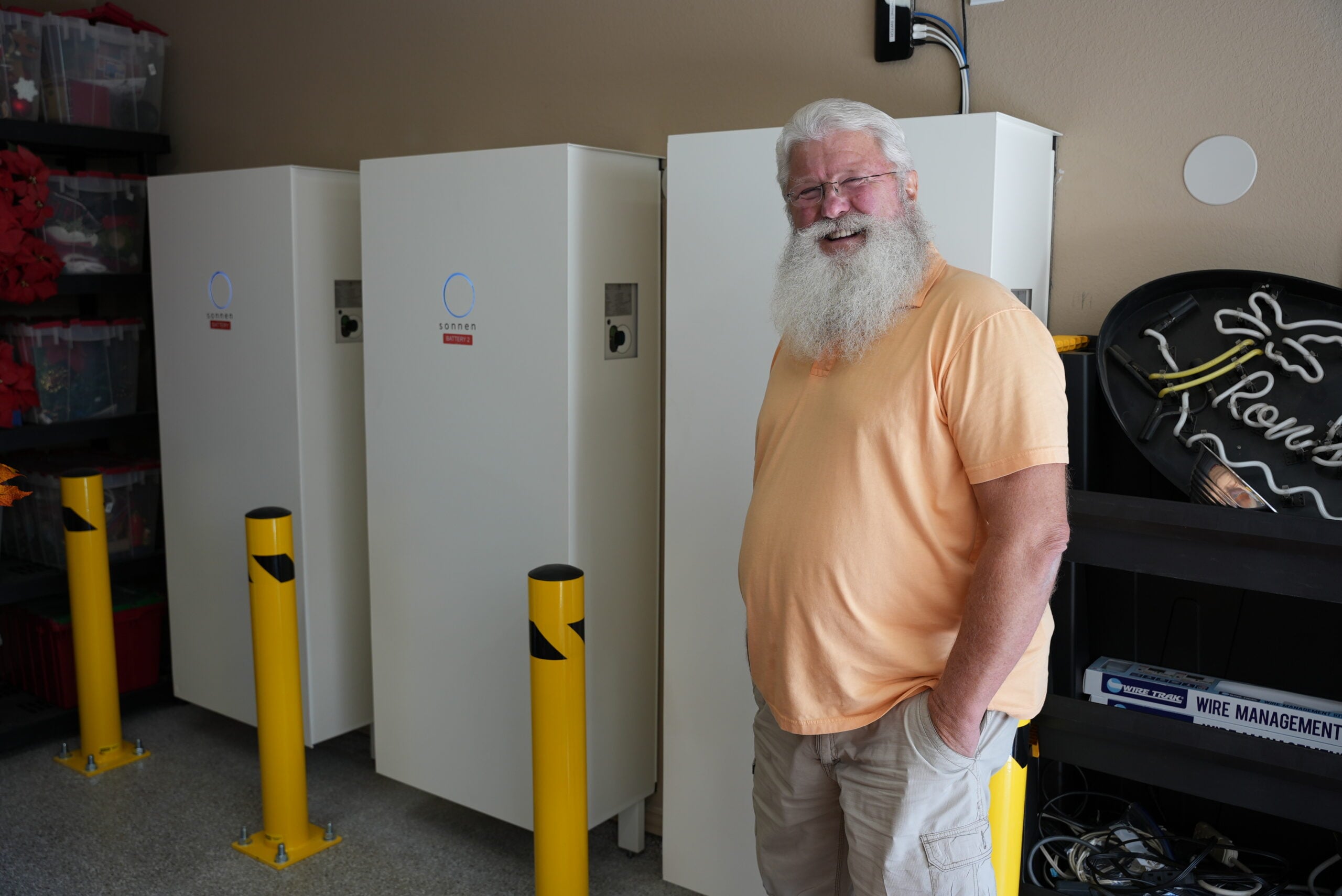
And there's the outage you don't bother with
Power goes out at 6pm on a Tuesday. No storm, nothing dramatic, a transformer somewhere.
You could fire up the generator. Most people don't, for forty minutes. So you sit in the dark with your phone, wait it out, and reset the clocks afterward.
A battery covers that one silently, instantly, without you deciding anything. It's the small stuff a generator is over-engineered for.
What we're actually offering
A battery system and a solar array, installed at no cost to you. No down payment, no installation charge, no monthly equipment fee. We own the equipment, we insure it, we maintain it, and we replace it if it wears out. Typically 45 to 60 kilowatt hours of battery capacity, and they live indoors, usually the garage.
Then your electricity is a flat 12 cents a kilowatt hour, all in. Delivery, fees, taxes, all of it in the twelve cents, with nothing underneath it.
If you're under contract with a retail provider and they charge you to leave, we cover it, whatever it costs.
For you specifically, the outage protection is the part you already have. The bill is the part you don't.
On running alongside what you've got
You're not being asked to remove the generator. The two systems live on the same house.
Beyond that, I'm going to be careful, because this is where somebody could tell you what you want to hear and be wrong.
How exactly your generator and this system sit together on your electrical setup is an engineering question, and it depends on your transfer switch, your panel, your generator's model and age, and how it's currently wired. Whether the generator can charge the batteries, how the two hand off, what happens to your existing automatic transfer switch, those are real questions with real answers, and the answers come from the engineer and the site survey, not from a web page and not from whoever calls you.
So bring the details. Make, model, roughly when it went in, and whether you know what transfer switch you have. That's a short conversation with somebody who can actually answer it, and it's worth having before you decide anything.
If it turns out your setup makes this awkward, we'd rather find that at the survey than after.
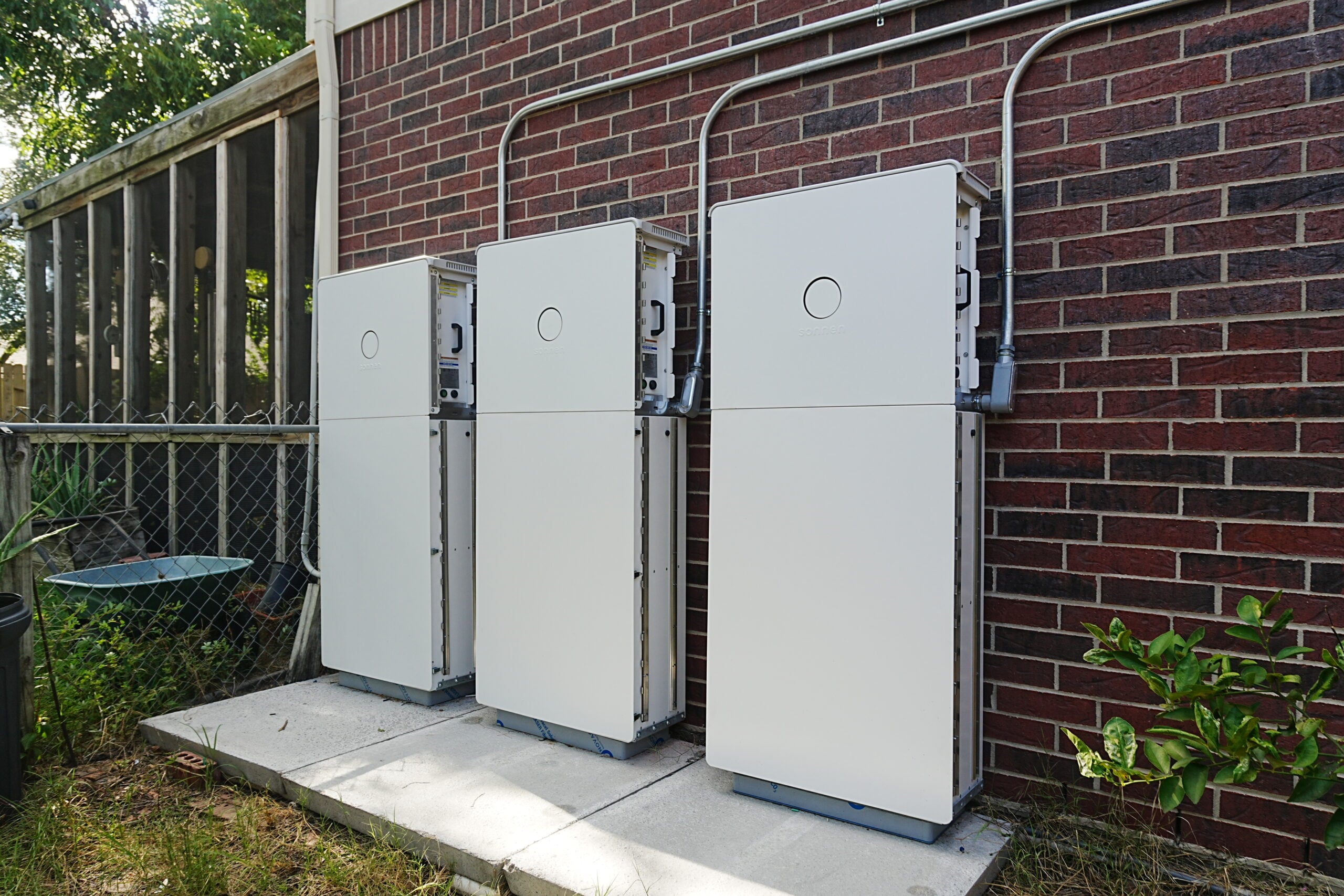
Why any of this is free
We make our money from the grid, not from you.
Power is cheap at three in the morning and expensive at five in the afternoon when every air conditioner in Texas is running at once. We charge the batteries when it's cheap, and at peak we sell that stored energy back at a much higher price. Across a lot of houses it adds up to a real business, and that revenue pays for your equipment.
That's what a virtual power plant is. A fleet of home batteries the grid can lean on instead of firing up an expensive backup plant on a hot afternoon.
You'll appreciate the irony. Utilities have been doing exactly what your generator does, at enormous scale, for decades. This is the version where you get paid for it in the form of a lower rate instead of writing the check yourself.
The model has been around about ten years. Our team has been doing it in Texas for two.
What the battery does during an outage
Since you'll ask, and since you have a real basis for comparison.
On the battery alone you get up to 3 days, depending on what you're running. The solar keeps feeding it during the day, so it's designed to recharge itself rather than drain to nothing.
It's silent, there's no fuel, and there's nothing to start. It also handles the short outages without you doing anything.
For a week-long event with heavy cloud, you have a generator, and that's a reasonable division of labor.
The parts you'd rather hear now
You switch electricity providers.
That's how the rate works.
The batteries need indoor space.
Usually the garage. If your garage is already hosting a generator's worth of equipment, worth measuring.
Not every house qualifies.
Heavy shade, an old roof, the wrong roofline. Sometimes the answer is no, and the site survey is free either way.
Who this doesn't work for
Renters, and mobile or manufactured homes.
If you're on a co-op or a regulated utility you can't switch providers, and there's no version of this we can offer. Thirty seconds to check.
HOA is usually fine. We deal with them constantly and handle that paperwork ourselves.
What happens next
A video call with one of our engineers. Google Meet, from the kitchen table. Nobody comes to the house for it.
Bring two things, your most recent electric bill, and what you know about your generator. The bill is how anyone works out your real rate and builds you a design. The generator details are how you get a straight answer about how the two sit together instead of a hopeful one.
If it looks like a fit, there's a free site survey. If the house doesn't pass, that costs you nothing.
You already bought the insurance
This is about the other 360 days.
Book the callBring your most recent electric bill. No commitment on the call.