

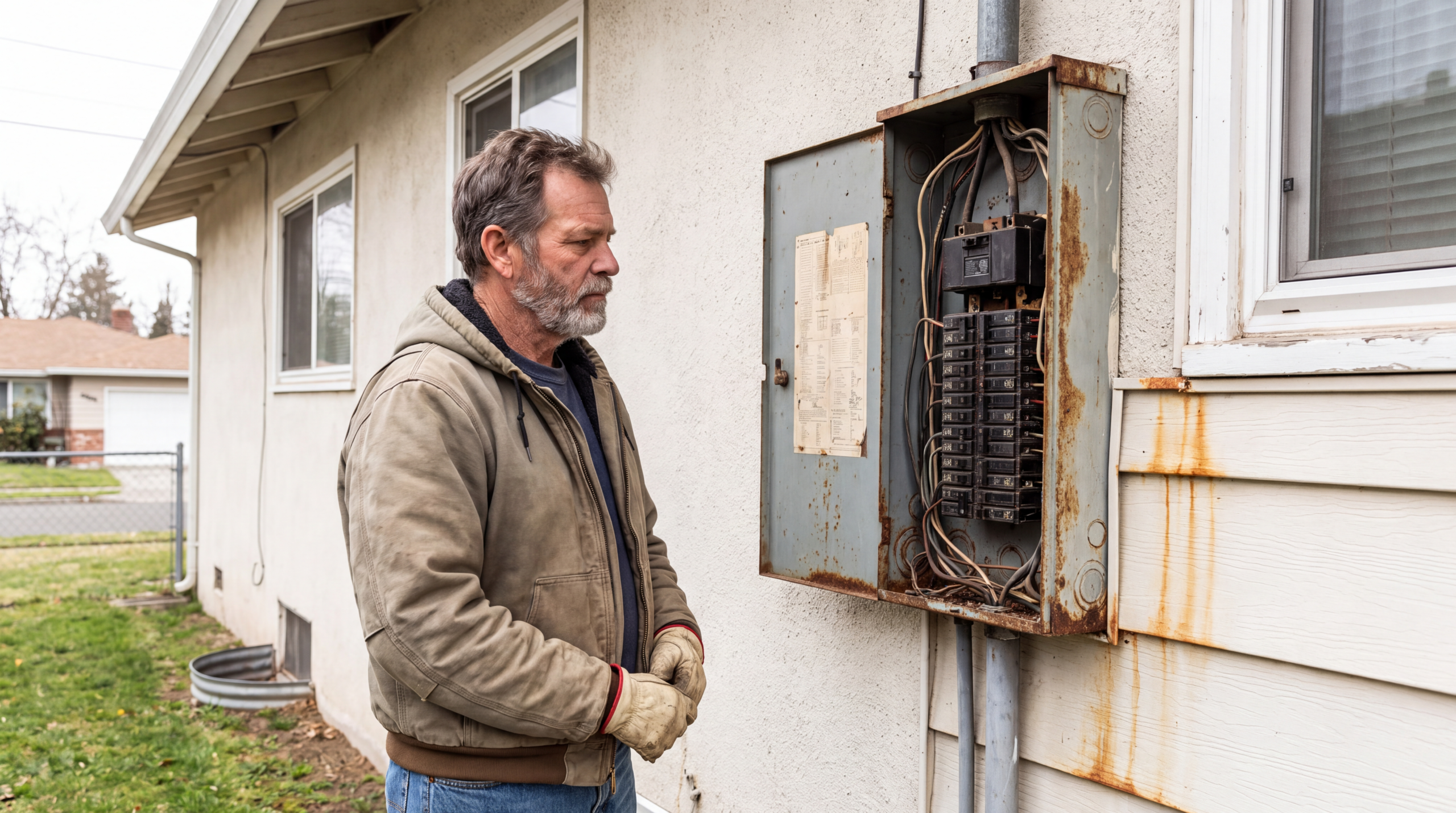
Nobody mentions the panel until the end
For Texas homeowners with an old, small, or awkwardly located electrical panel.
You've probably had this conversation already.
Somebody quotes you on solar, or a battery, or an EV charger. The number sounds workable. You get most of the way through, you're starting to picture it, and then somebody who actually looked at your house says the words "you'll also need to upgrade your panel."
And the number moves. Not by a little.
That's usually where it stops. You put the folder in a drawer and you don't think about it again for two years.
Why the panel keeps coming up
Anything that puts real power into your house has to land somewhere, and that somewhere is your main electrical panel.
If your house went up in the seventies or eighties, that panel was sized for the house as it existed then. A window unit, a range, a dryer. Then somebody added central air, and a second fridge in the garage, and a hot tub, and now you're thinking about a battery system too.
A hundred amp panel that was generous in 1985 is tight now. And if yours has been upgraded once already, you know the drill, because somebody wrote you a separate check line for it.
What we do about it
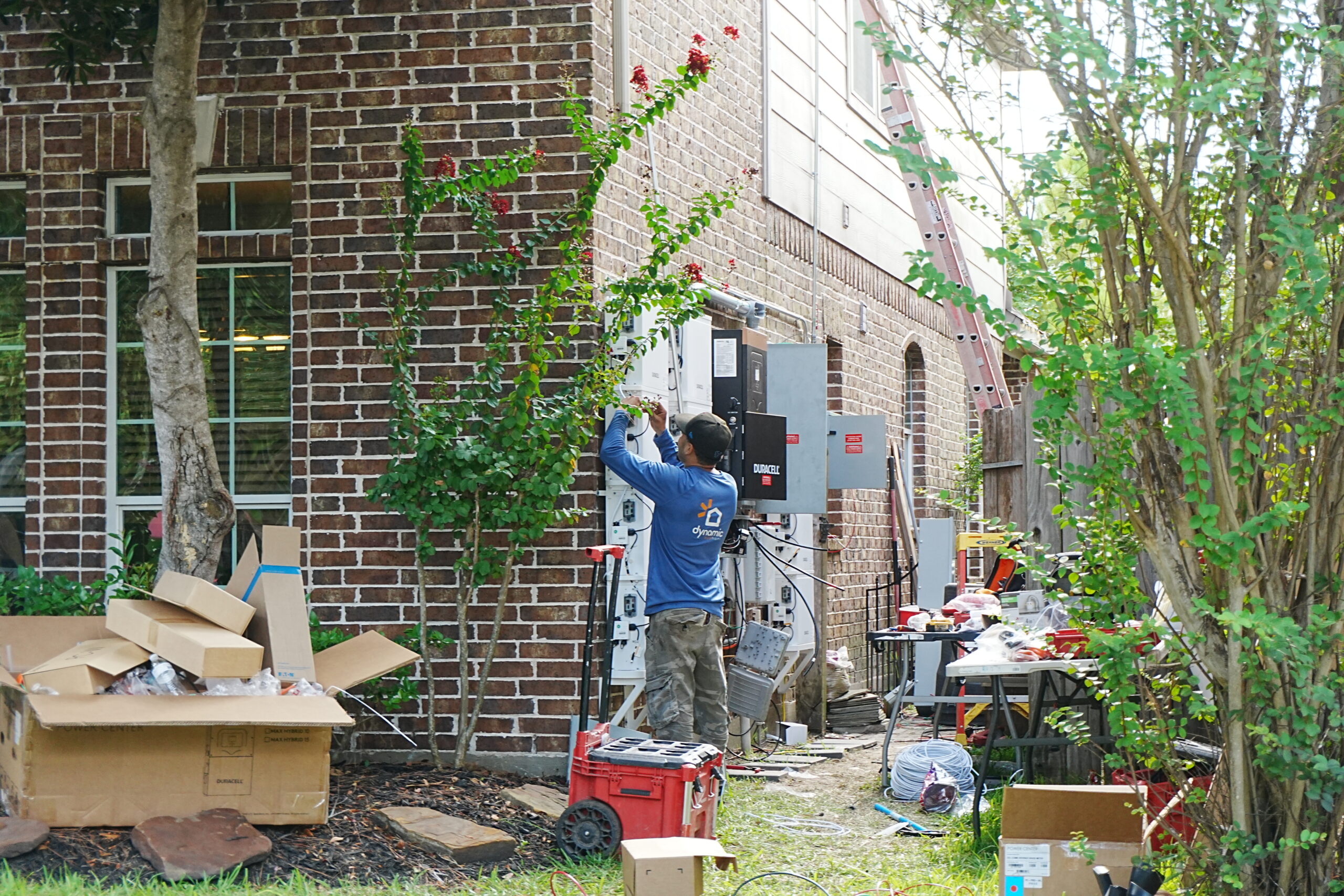
If your panel needs work to support this system, that's part of the installation, and the installation costs you nothing.
It isn't a change order. It isn't a "well, in your case" conversation three weeks in. The equipment is $0, the install is $0, and the electrical work that makes the install possible sits inside that.
We'd rather absorb it than have the thing collapse at the last minute, which is what happens to everyone else's version of this deal.
What I'm not going to tell you
Whether your panel specifically needs upgrading, or what it needs.
I can't see your panel. Nobody who calls you can either. What amperage you're at now, whether the location works, whether the meter base comes into it, whether your particular setup is straightforward or a project, that's what the engineer and the site survey are for.
Anyone who tells you over the phone exactly what your electrical service needs, without having looked at it, is guessing at something that costs real money to be wrong about.
What I can tell you is that the work required to make this system run at your house is on us, and you'll know the specifics before you sign anything rather than after.
If you're already assuming you don't qualify
Worth saying, because people take themselves out of this.
A panel that's old doesn't automatically kill it. Neither does a small one, since that's the thing being addressed. Neither does one in an inconvenient spot, we've had homeowners assume they were out because their main breaker sits inside a closet, or the box is around the back of the house, and that assumption wasn't the engineer's conclusion.
There are houses where the answer is genuinely no. Sometimes it's the roof, sometimes it's shade, sometimes it's the electrical situation. But the site survey is free, and a no costs you nothing but the time.
Guessing yourself out of it costs you the same as a no, with less information.
The rest of it, since you're here
The panel is the part you were worried about. Here's what it's attached to.
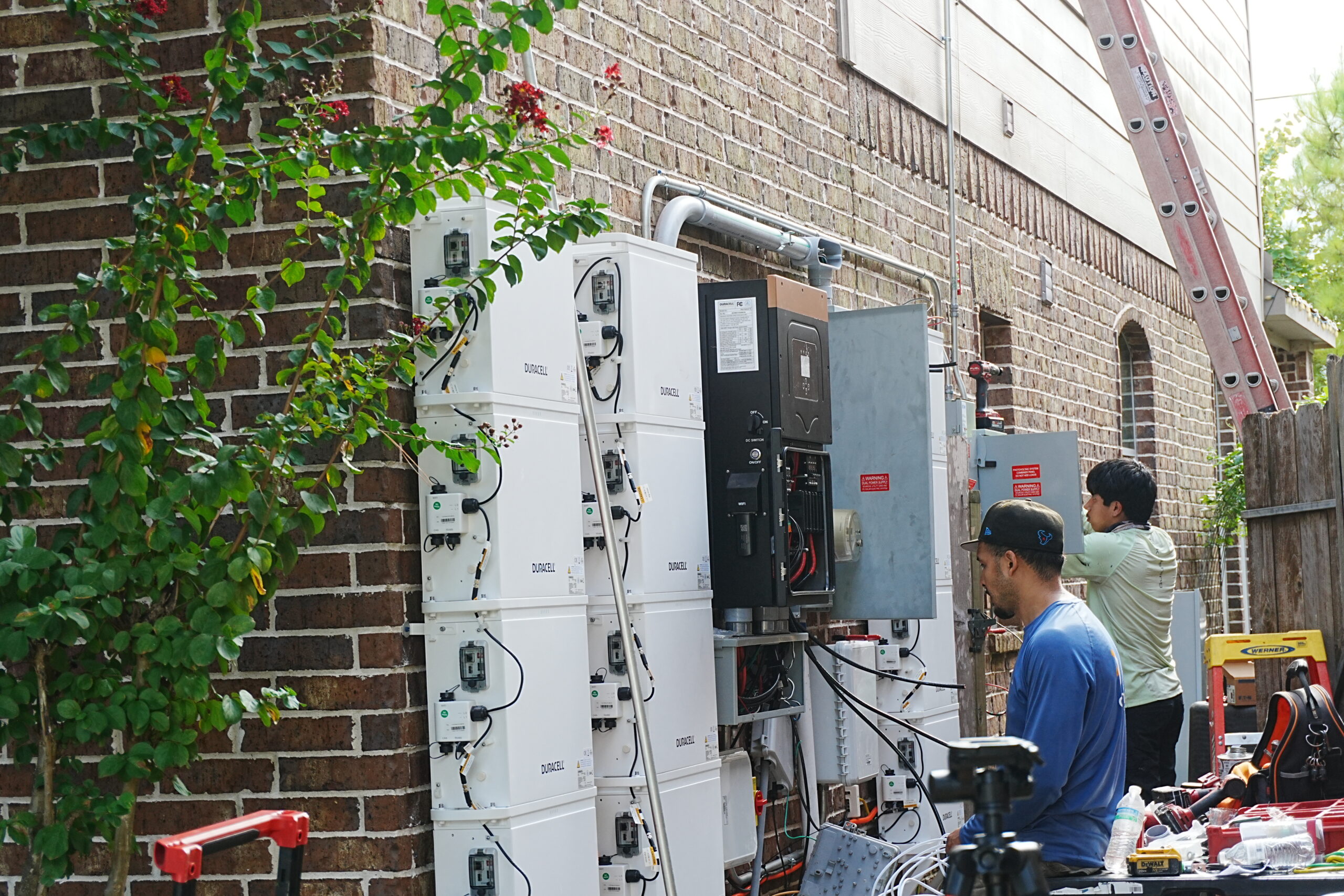
A battery system and a solar array, installed at no cost. No down payment, no equipment fee, no monthly charge. We own it, we insure it, we maintain it, and we replace it if it wears out. Typically 45 to 60 kilowatt hours of battery capacity, indoors, usually the garage.
Your electricity becomes a flat 12 cents a kilowatt hour, all in. Delivery, fees, taxes, the whole bill in the twelve cents with nothing underneath.
If you're under contract with a retail provider and they charge to leave, we cover that too, whatever the number is.
When the power goes out, the batteries take over. On the battery alone that's up to 3 days depending on what you're running, and the solar keeps feeding them during the day, so the system is built to recharge itself rather than drain to nothing.
Why it's free
We make our money from the grid, not from you.
Power is cheap at three in the morning and expensive at five in the afternoon when every air conditioner in Texas is going at once. We charge the batteries when it's cheap and sell that stored power back at peak. Across a lot of houses that's a real business, and that revenue is what pays for your equipment, your install, and the electrical work that makes it possible.
That's what a virtual power plant is. A fleet of home batteries the grid can lean on instead of firing up an expensive backup plant on a hot afternoon.
The model's been around about ten years. Our team has been doing it in Texas for two.
The parts you'd rather hear now
You switch electricity providers.
That's how the rate works.
The batteries need indoor space.
Usually the garage.
Not every house qualifies.
The site survey is where that gets decided, and it's free.
Who this doesn't work for
Renters, and mobile or manufactured homes.
If you're on a co-op or a regulated utility you can't switch providers, and there's no version of this we can offer. Thirty seconds to check.
HOA is usually fine. We deal with them constantly and handle that paperwork ourselves.
What happens next
A video call with one of our engineers. Google Meet, from the kitchen table. Nobody comes to the house for it.
Two things to have ready.
Your most recent electric bill, because without it nobody can build you a design or tell you your real rate.
And a photo of your electrical panel with the door open, including the label inside it. That one photo answers about half the questions anybody would have about your setup, and it's the difference between a vague conversation and a specific one.
If it looks like a fit, there's a free site survey. Somebody comes out and looks properly. If the house doesn't pass, that costs you nothing.
The panel is normally the thing that ends the conversation
Here it's part of the job.
Book the callBring your most recent electric bill and a photo of your panel. No commitment on the call.