

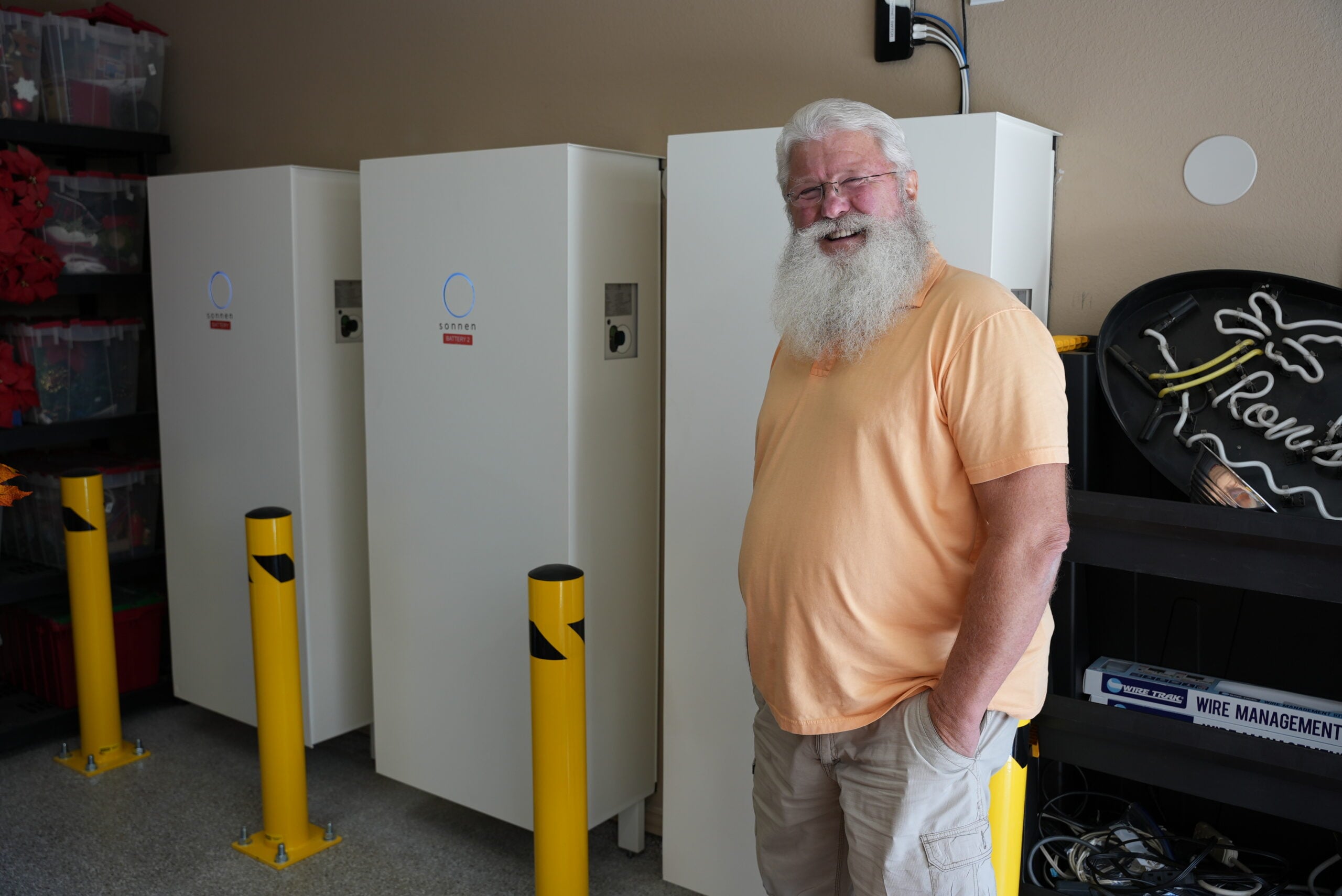
The plan requires someone to go outside in a storm
For anyone worrying about a parent's house the next time the power goes out.
The plan, as it currently stands, is that your eighty-one year old father goes out to the garage in the dark, drags a generator onto the driveway, checks the oil, fills it with gas he had to go buy before the storm, and pull-starts a small engine.
Or the plan is that he calls you in Dallas and you drive down.
Or there isn't a plan, and everyone has quietly agreed not to talk about it.
Backup power usually assumes a fit person is home
That's the part nobody says out loud when they sell it.
A portable generator needs to be moved, fueled, started, and run outside, away from windows, which is a real requirement and not a suggestion. Every year after a big storm, people die of carbon monoxide poisoning because a generator ended up in a garage or too close to the house. Older people living alone are exactly who that happens to.
A standby generator is better. It still needs annual servicing, it still runs a weekly test cycle, and it still occasionally doesn't start on the morning it's needed. If your mother wouldn't know what to do when it doesn't start, then the backup plan has a person-shaped hole in it.
Fuel is the other assumption. Somebody has to have bought gas before the storm, or somebody has to be able to lift a propane tank. Neither is a thing you want depending on an eighty year old, and neither is a thing you can do from three hours away.
What this does instead
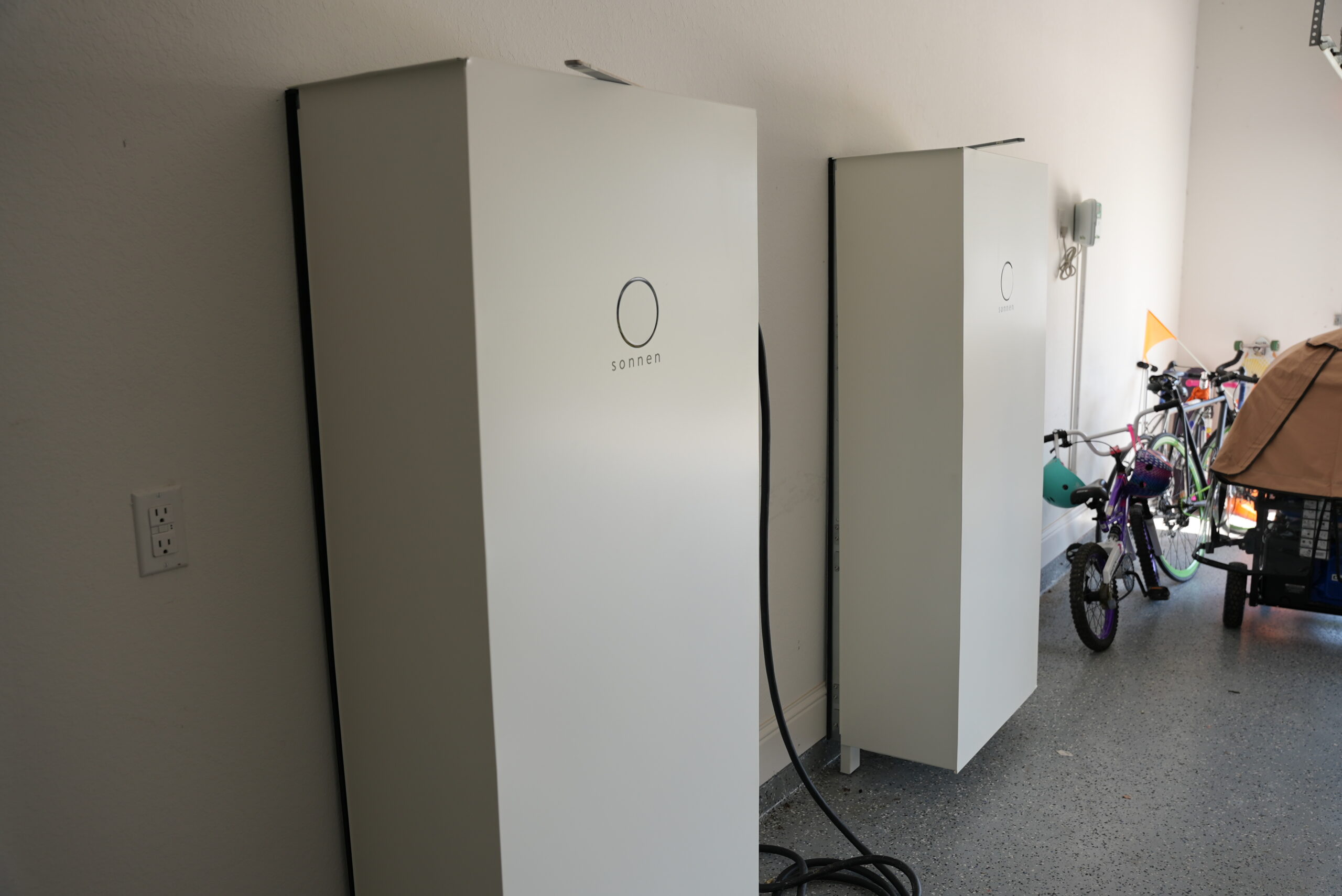
When the power drops, the batteries take over. That's it. That's the whole interaction.
Nothing to start. No cord, no switch, no fuel, no going outside in weather. The lights stay on and your parent finds out later that the street lost power, usually because a neighbor mentions it.
The system lives indoors, typically in the garage, and it's silent. There's no weekly test cycle rattling the house, no annual service call to remember, and nothing that needs to be exercised. We own the equipment, we insure it, we maintain it, and we replace it if it wears out. That maintenance is our job, not theirs and not yours.
The honest limits, because you'll want them
On the batteries alone, up to 3 days, depending on what's running. The solar array feeds them during the day, so the system is designed to recharge itself rather than drain to nothing.
That covers most of what happens. It does not make the house immune to a week-long catastrophe, and anyone who tells you otherwise is overselling.
I'm also not going to tell you whether it runs the air conditioning, or a specific piece of medical equipment, or for how long. That depends on the house, the electrical panel, the size of the system, and what's live at once. It's a real question with a real answer and the answer comes from the engineer who looks at the house, not from a web page.
If there's medical equipment in the picture, say so on the call and say it plainly. It changes the design, and whatever plan is already in place with the utility or the equipment supplier should stay in place regardless.
You cannot do this one for them
Worth saying early, because it catches people out.
Your parent owns the house, so your parent signs. You can research it, you can sit in on the call, you can ask the questions they won't think to ask, and honestly you should. But this can't be arranged as a surprise.
What works is everyone on the same call. The homeowner, and whichever adult child is actually going to be fielding the phone calls at midnight. Trying to relay this conversation secondhand goes badly, and the person who wasn't there is always the one with the sharpest question.
If it helps, the agreement transfers with the home if it's ever sold. That question comes up in almost every one of these conversations, usually about ten minutes in, and it's a fair one to ask early.

The part that matters on a fixed income
The equipment is free. No down payment, no installation charge, no monthly equipment fee. Typically 45 to 60 kilowatt hours of battery capacity plus a solar array, and none of it costs anything to put in.
The electricity is a flat 12 cents a kilowatt hour, all in. Delivery, fees and taxes are inside that twelve cents, not stacked underneath it, which is the thing that makes most people's bills higher than they expect. Your engineer goes through the agreement in full before anything gets signed, and you should read it with them.
If your parent is under contract with a retail provider and there's a fee to leave, we cover it, whatever it is.
For a household on a fixed income, a lower power bill on equipment that cost nothing is not a small thing, and it's the part of this that's easiest to verify. Take a look at their last bill and divide the total by the kilowatt hours used. That's what they're paying now.
Why it's free
We make our money from the grid, not from your parents.
Power is cheap at three in the morning and expensive at five in the afternoon when every air conditioner in Texas is running at once. We charge the batteries when it's cheap and sell that stored energy back at peak. Across a lot of houses that adds up to a real business, and that revenue is what pays for the equipment.
That's what a virtual power plant is. A fleet of home batteries the grid can lean on instead of firing up an expensive backup plant. The model has been around about ten years. Our team has been doing it in Texas for two.
The parts you'd rather hear now
They'd switch electricity providers.
That's how the rate works.
The batteries need indoor space.
Usually the garage. Worth going and looking at what's already in there.
Not every house qualifies.
Heavy shade, an old roof, the wrong roofline. The site survey is free and a no costs nothing.
Who this doesn't work for
Renters, and mobile or manufactured homes.
If they're on a co-op or a regulated utility, they can't switch providers and there's no version of this we can offer. Thirty seconds to check, and worth checking before anyone spends more time on it.
An HOA is usually fine. We deal with them constantly and handle that paperwork ourselves.
What happens next
A video call with one of our engineers. Google Meet, from the kitchen table. Nobody comes to the house for it, which for a lot of families is the point.
Bring the most recent electric bill, because without it nobody can build a design or say what they're really paying.
And get everyone on the call who's going to have an opinion afterwards.
If it looks like a fit, there's a free site survey. Somebody comes out and looks at the roof and the panel properly. If the house doesn't pass, that costs nothing.
The current plan requires someone to go outside in a storm
That's the thing worth fixing, and it's fixable.
Book the callBring your parent's most recent electric bill. No commitment on the call.