

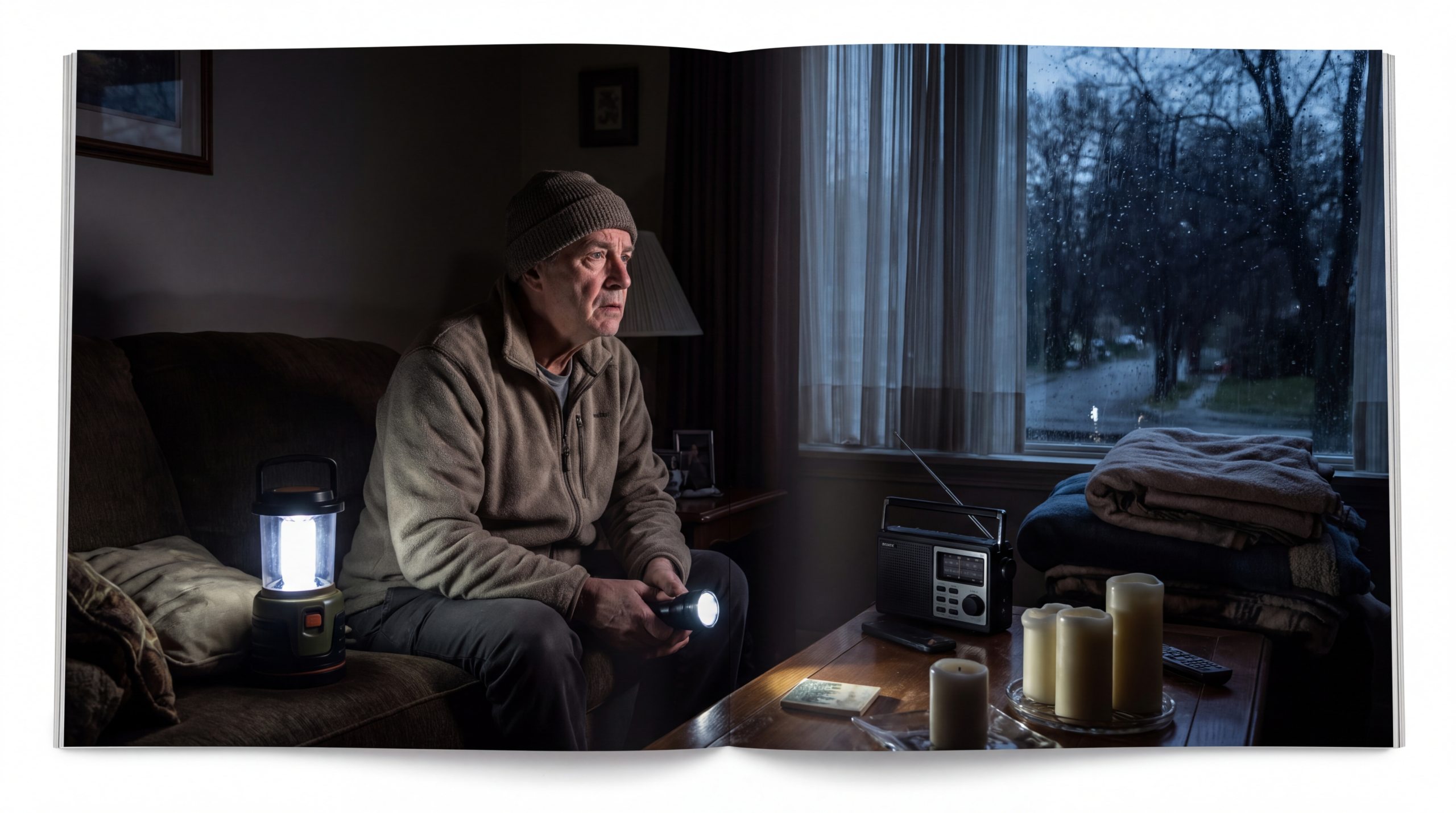
The third day is the one that gets you
For Texas homeowners who have already sat through a long outage.
Hour one is fine. You find the flashlights, somebody makes a joke about camping, the kids think it's great.
Hour six is annoying.
By the third day you've thrown out everything in the freezer, you've been running the truck in the driveway to charge phones, and you're having a real conversation about whether to drive to your sister's place in Conroe or keep waiting on the CenterPoint outage map that hasn't updated since yesterday afternoon.
Nobody who sells backup power talks about the third day. They sell you hour one, because hour one is easy and it photographs well.
If you're reading this, you already know hour one is easy.
Three questions worth answering honestly
Before anything else. Not for us, for you.
- How often do you actually lose power at the house? Not the flicker that resets the microwave. Real outages.
- What's the longest you've ever been out? Most people in this state have a specific answer, and it's usually Beryl, Harvey, or the February freeze.
- What did you do? This is the one that matters. Whatever you did then is what you'll do again, unless something changes.
If your answer to the third question was "we managed," that's worth sitting with. Managing is a plan that works until the outage is one day longer than the last one.
The honest number
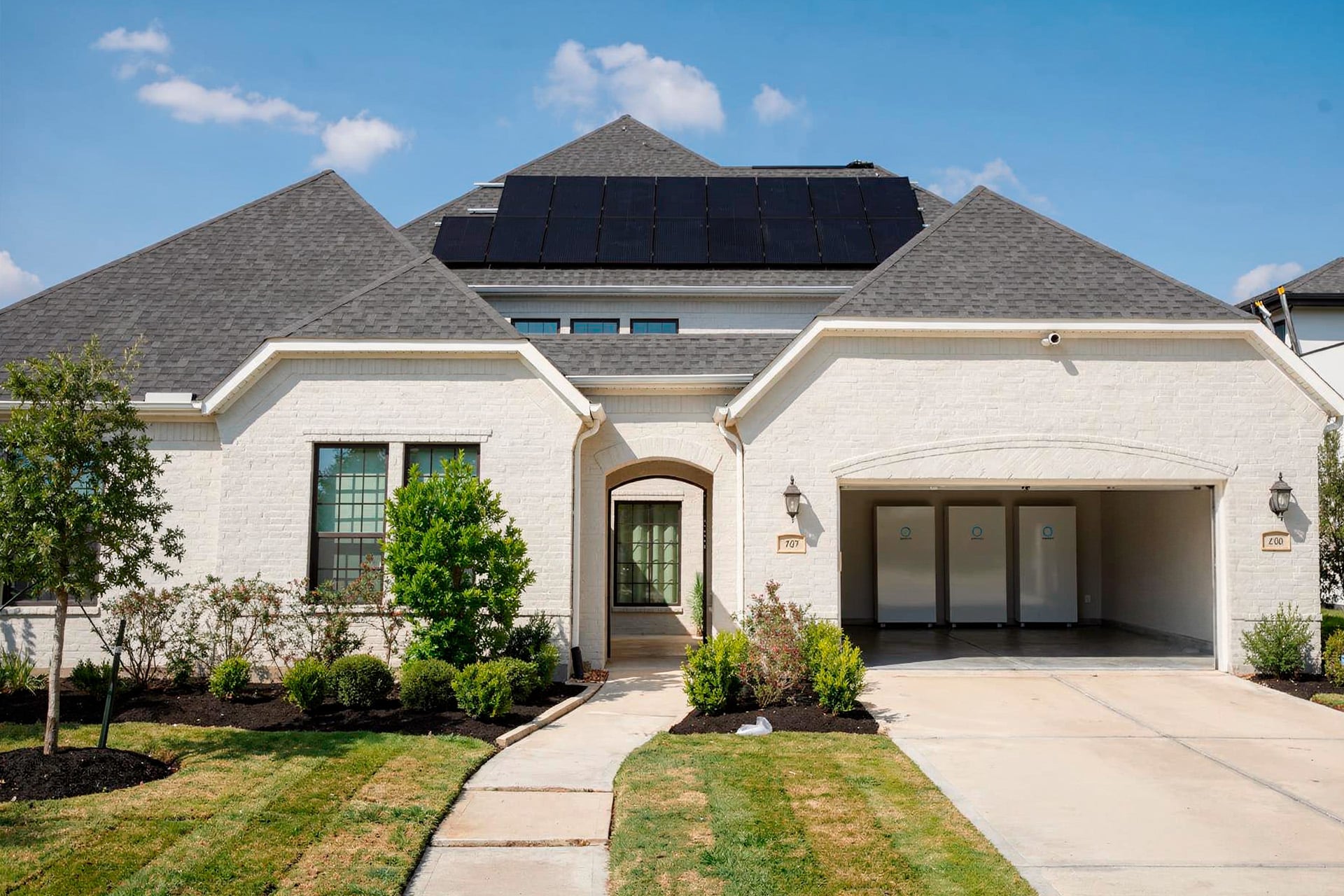
A home battery on its own gives you up to 3 days, depending on what you're running.
That's the real figure and I'd rather you have it now than find out in August. Anyone who tells you a battery alone will carry you through a week-long outage is either confused or selling.
Three days covers most of what Texas throws at you. It doesn't always cover something like Beryl. It didn't cover the freeze for everyone.
Which is the entire reason for the solar
A battery by itself is a bucket. You fill it, you use it, it's empty. Everything after that is waiting.
Pair it with panels and it stops being a bucket and starts being a loop. The sun comes up, the panels feed the batteries, and you get another day. Then another one.
That's the difference between a system built for an inconvenience and one built for the week you actually remember.
The system is designed to keep recharging itself for as long as the outage runs. It depends on sun and on what you're running, and there are days in February with heavy cloud where it won't keep up the way it would in July. That's the honest version. It's still a fundamentally different thing from a bucket.
What I'm not going to tell you
Whether it runs your air conditioning.
This is the question everybody asks, and it's the one you most want answered, and I'm not going to answer it on a web page. Neither will anyone else here before an engineer has looked at your electrical panel, your usage history, and what you actually need to keep running.
It depends on the size of your system, the size of your house, and how much of it you want live at once. Somebody who gives you a yes to that question over the phone, sight unseen, is guessing at something you'd hold them to in a heat wave.
Same goes for how many days you'd get, and whether it carries the well pump, and what happens on a stretch of overcast. Real questions, all of them. Engineer questions.
Versus the generator you've been pricing
You've probably looked at a whole-home generator. Most people who've been through a long outage have a quote sitting in a drawer somewhere.
The differences that matter after the third day:
- Fuel. A generator needs it. Natural gas is fine until the line has a problem, propane runs out and the delivery trucks are busy during exactly the week you need one. A battery and solar setup makes its own.
- Noise. A generator is loud, and it's loud continuously, including at three in the morning while your neighbors are trying to sleep with the windows open because their AC is off.
- Upkeep. A generator needs to be exercised, serviced, and started. Plenty of people have discovered their generator doesn't run on the one morning it needed to.
- Cost between outages. A generator sits there costing you money. This does the opposite, which brings up the part you probably weren't asking about.
The part that isn't about outages
You'd be switching to a flat 12 cents a kilowatt hour, all in. Delivery, fees, taxes, all of it in the twelve cents, with no second line item underneath.
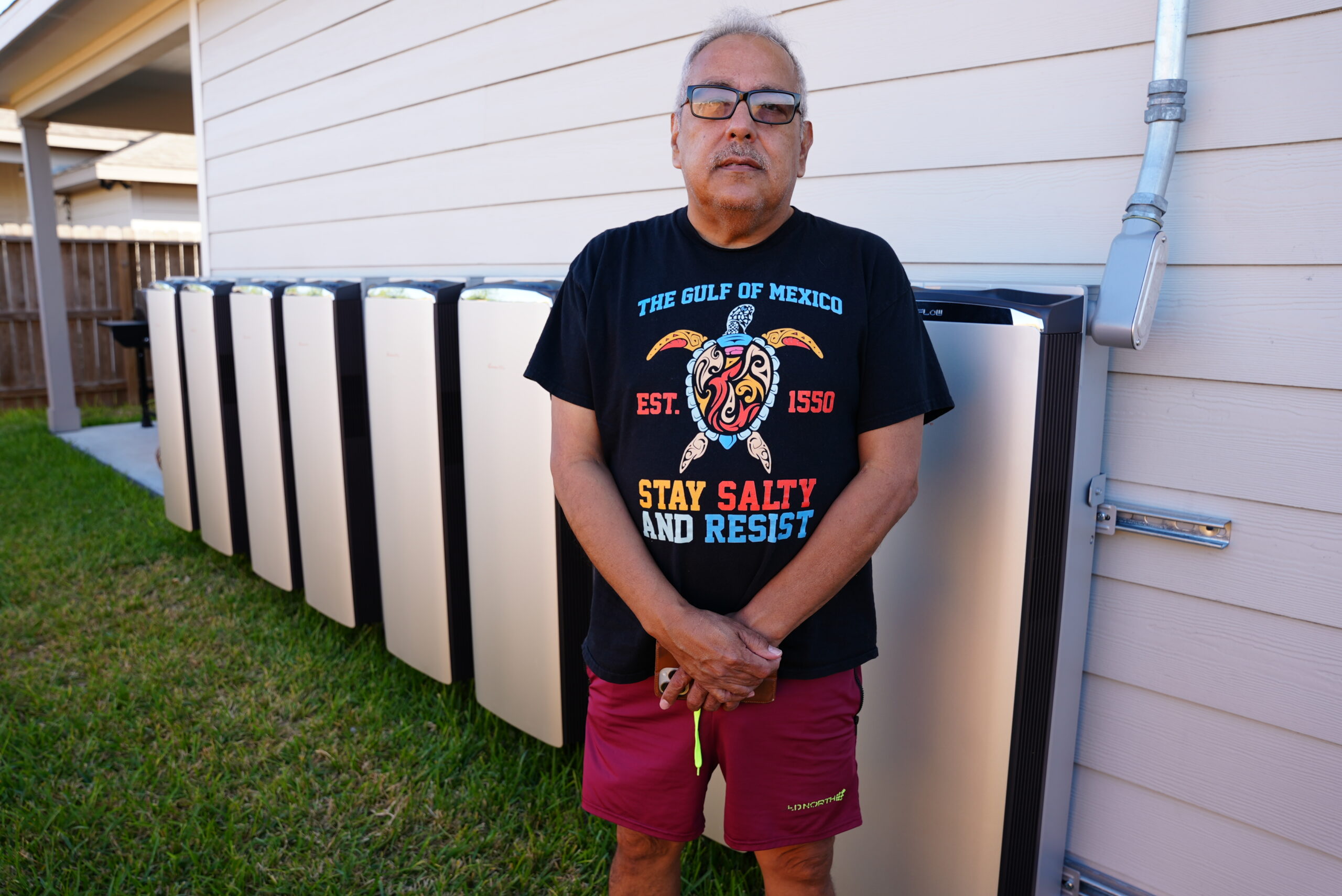
The equipment costs you nothing. No down payment, no install charge, no monthly equipment fee. We own the batteries and the panels, we insure them, we maintain them, and we replace them if they wear out. Typically 45 to 60 kilowatt hours of battery capacity, and they live indoors, usually in the garage.
If you're currently under contract with a retail provider and they charge to leave, we cover it, whatever the number is.
For most people reading this page, that's a nice bonus rather than the reason. You want the lights to stay on. Fine. It's worth knowing the bill goes down instead of up, because it means you're not choosing between backup power and the money.
Why it's free
We make our money from the grid, not from you.
Power is cheap at three in the morning and expensive at five in the afternoon when every air conditioner in the state is running. We charge the batteries when it's cheap and sell that stored power back at peak. Across a lot of houses that adds up to a real business, and that revenue is what pays for your equipment.
That's what a virtual power plant is. Your battery is part of a fleet the grid can lean on instead of firing up an expensive backup plant. The model's been around about ten years. Our team has been doing it in Texas for two.
The parts you'd rather hear now than later
You switch electricity providers.
That's how the rate works.
The batteries take up real garage space.
Worth walking out there and looking.
Not every house qualifies.
Heavy shade, an old roof, the wrong roofline. Sometimes the answer is no.
Who this doesn't work for
Renters, and mobile or manufactured homes.
If you're on a co-op or a regulated utility, you can't switch providers, and there's no version of this we can offer you. Thirty seconds to check.
If you have an HOA, that's usually fine. We deal with them constantly and handle that paperwork ourselves.
And if somebody in the house depends on power for medical equipment, say so early and say it plainly. It changes how the system gets designed and it changes the priority.
What happens next
A video call with an engineer. Google Meet, from your kitchen table. Nobody comes to the house for it.
Bring your most recent electric bill, because without it nobody can build you a design. If there's a spouse or a co-owner, get them on the call. This goes badly secondhand, and the person who wasn't on the call is usually the one with the sharpest questions.
If it looks like a fit, there's a free site survey. Somebody gets on the roof, checks the shade and the roofline and your panel. If the house doesn't pass, that costs you nothing. If it does, design and permits come next, and from approval to a working system is usually somewhere around forty five days.
Don't wait for the next one
The next one is coming. You don't know when, and neither do we, and that's precisely the problem with deciding after.
The last time, you managed. Worth thinking about whether you want to manage again.
Book the callBring your most recent electric bill. No commitment on the call.